
Founders

Andrés Mario Zervigón
zervigon (at) rutgers (dot) edu
Andrés Mario Zervigón is Professor of the History of Photography at Rutgers,The State University of New Jersey. His research generally focuses upon moments in history when lens-based media prove inadequate to their presumed task of representing the visual. Zervigón's first book, John Heartfield and the Agitated Image (University of Chicago Press, 2012) examines the Weimar-era work of this German artist and the crisis of photographic representation generating his highly political photomontage. His second book, Photography and Germany, explores the medium’s history in establishing visions of the country and constructions of German identity. His current book project, The Arbeiter-Illustrierte Zeitung, a History of Germany’s Other Avant-Garde, focuses on the extraordinary pictorial innovations of this radical left-wing periodical. He received a Paul Mellon Senior Fellowship at the Center for Advanced Study in the Visual Arts to support this project. Zervigón has published articles and reviews in New German Critique, Visual Resources, October, History of Photography, Études Photographiques, and Rundbrief Fotografie, and he contributed to the catalogs Avant-Art in Everyday Life (Art Institute of Chicago/Yale University Press, 2011) and Faking It: Manipulated Photography before Photoshop (Metropolitan Museum, NYC, 2013).

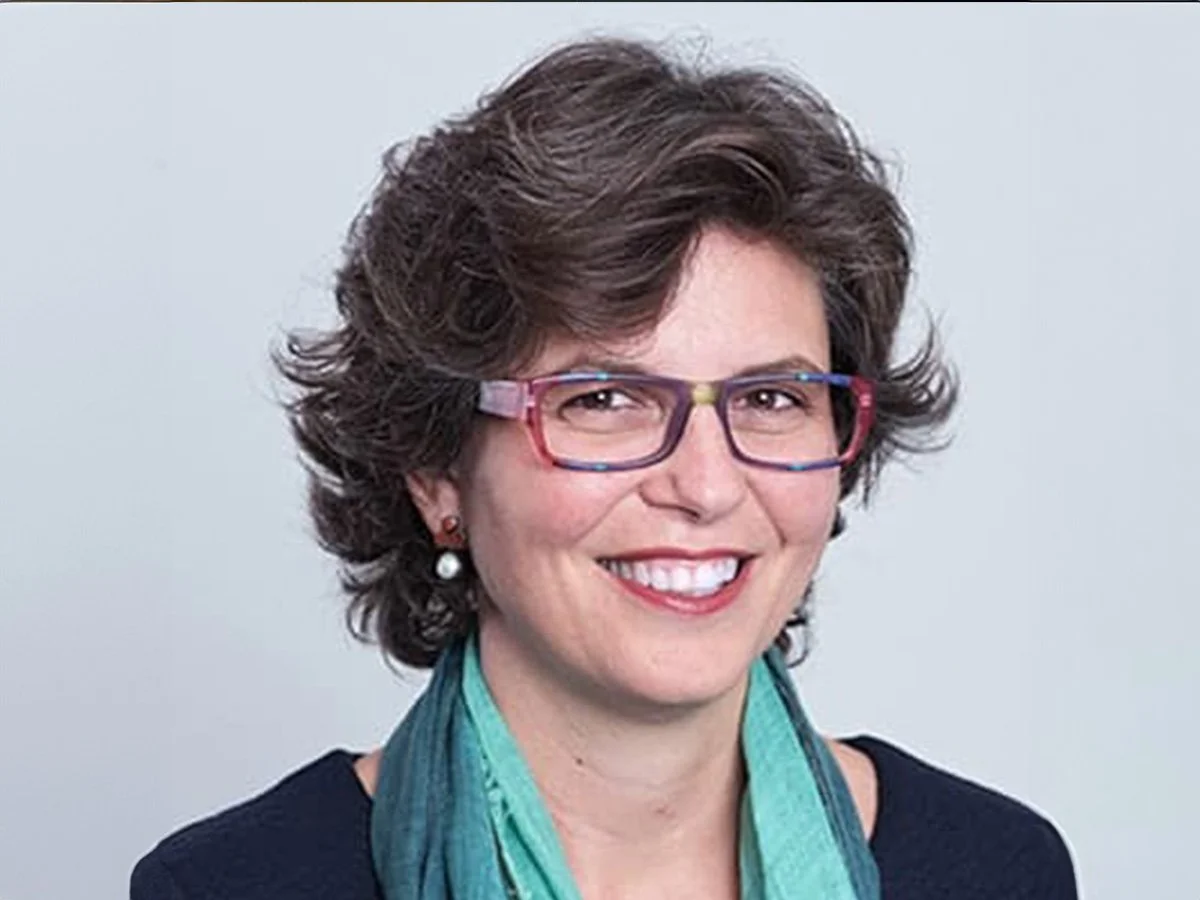
Tanya SHEEHAN
Tanya Sheehan is Distinguished Scholar and Director of Research at the Lunder Institute for American Art, and William R. Kenan Jr. Professor of Art at Colby College. She is the author of Doctored: The Medicine of Photography in Nineteenth-Century America (2011) and Study in Black and White: Photography, Race, Humor (2018). Her edited books include Photography, History, Difference (2014), Photography and Its Origins (2015, with Andres Zervigon), Grove Art Guide to Photography (2017), and Photography and Migration (2018). Since 2015 she has served as executive editor of the Smithsonian Institution’s Archives of American Art Journal.
Zeynep devrim Gürsel
Zeynep Devrim Gürsel is a media anthropologist whose scholarship involves both the analysis and production of images. She is the author of Image Brokers: Visualizing World News in the Age of Digital Circulation (University of California Press, 2016), an ethnography of the international photojournalism industry during its digitalization at the beginning of the 21st century, based on fieldwork conducted in the United States, France and Turkey. Set against the backdrop of the War on Terror and based on several years of fieldwork conducted at photojournalism’s centers of power, Image Brokers offers an intimate look at newsrooms covering the American wars in Iraq and Afghanistan among other global news. At the turn of the 21st century, image brokers—the people who manage the distribution and restriction of news images—found the core technologies of their craft, the status of images, and their own professional standing all changing rapidly with the digitalization of the infrastructures of representation. From corporate sales meetings to wire service desks, newsrooms to photography workshops and festivals, Image Brokers investigates how news images are produced and how worldviews are reproduced in the process.
Gürsel is also the director of Coffee Futures, an award-winning ethnographic film that explores contemporary Turkish politics through the prism of the everyday practice of coffee fortune telling. (www.coffeefuturesfilm.com)
Since 2009 she has been researching photography as a tool of governmentality in the late Ottoman period. Specifically she is investigating photography during the reign of Sultan Abdülhamid (1876-1909) from medical imagery to prison portraiture to understand emerging forms of the state and the changing contours of Ottoman subjecthood. During 2018-2019 she was a NOMIS Fellow at eikones Center for the Theory and History of the Image in Basel, Switzerland. Her current project, Portraits of Unbelonging, is the first in-depth exploration of the official role of photography in the history of Armenian emigration to the United States.
She has published in Cultural Anthropology, American Ethnologist,Visual Anthropology, Grey Room, Anthropology Nowand Jadaliyya and has contributed chapters to volumes on global news and journalism, contemporary public spheres, photography and memory, and visual cultures of nongovernmental activism.
COLLABORATORS

Vero Chai
Vero Chai is a PhD student in Comparative Literature at Rutgers University. Her research focuses on the cross-fertilization of photography and literature with attention to the politics of visuality, race, memory, and the archive particularly in photo-textual practices that involve found visual records. Prior to Rutgers, Vero earned an M.A. in Interdisciplinary Studies from New York University, where she wrote her thesis on family portraits and snapshots to explore vernacular photography as a trialectical site of documentary evidence, counter-memory, and ideological articulation. Her article “Editing the Archive: Alexandra Bell’s Annotation, Redaction, and Epistemic Resistance in Counternarratives” appeared in Art Journal (vol. 80:2, 2021).

Julian Wong-Nelson
Julian Wong-Nelson is a third year PhD student in the Rutgers-New Brunswick Art History program. Their research interests include Asian-diasporic performance, photography, and video, queer & trans* theory, and cinema studies.